The fuse keeps tripping — causes, diagnosis and fixes
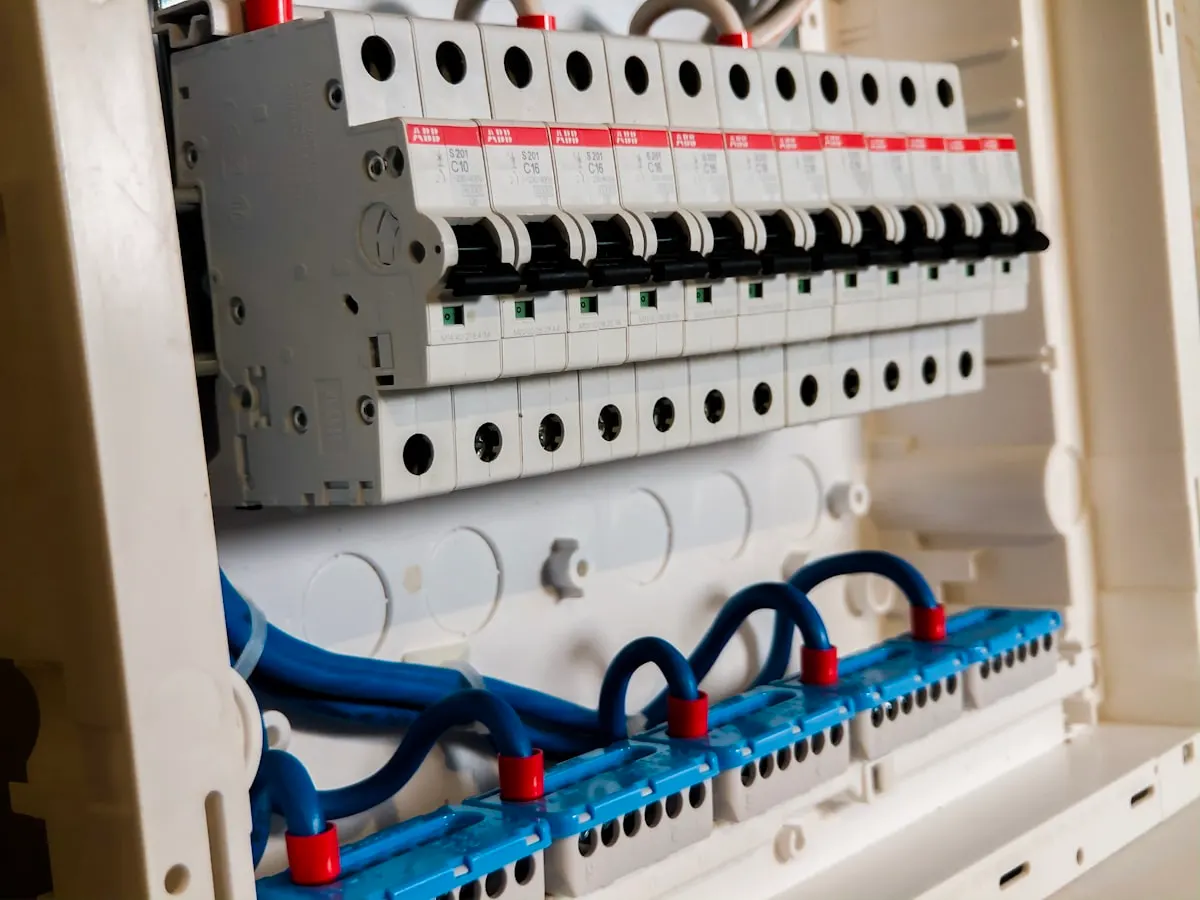
A fuse that trips occasionally is normal — that is your installation protecting itself. A fuse that trips constantly is a message.
Three faults that look identical — but are not
When a fuse or breaker trips, it is almost always one of three things: overload, short circuit or earth fault. The result is the same — the lights go out — but the mechanisms are completely different, and so is the remedy.
Overload means too many appliances are drawing current from the same circuit at once. A fuse exists to protect the cable in the wall: when the current stays above what the wiring is rated for, it trips. It is a slow fault — often seconds or minutes pass before it cuts out.
A short circuit means live and neutral come into direct contact, for example in a damaged cord or a faulty appliance. Resistance drops to almost nothing, the current spikes within a fraction of a second and the fuse trips instantly — sometimes with an audible snap or bang.
An earth fault means current is leaking where it should not go: from a live conductor to earth, often via moisture or damaged insulation. Detecting it is the job of the RCD, the residual-current device. It compares outgoing and returning current and trips at the slightest imbalance — normally at just 30 milliamps.
The behaviour tells you which fault you have
Before you start troubleshooting, pay attention to how it trips. The pattern usually says more than you would think.
- It trips instantly when one particular appliance is switched on, sometimes with a bang — suspect a short circuit in the appliance or its cord.
- It trips after a while when a lot is running at once — classic overload, most common in the kitchen and in winter when heaters are in use.
- The RCD trips and several circuits go dead, often when it rains — suspect an earth fault, typically in outdoor sockets or garden lighting.
- It trips seemingly at random with no pattern — possibly a loose connection or ageing wiring; have an electrician inspect it.
The circuit isolation method — step by step
The method narrows the fault down by elimination, entirely without tools. You only use switches, plugs and the levers in the consumer unit — never anything inside the fixed installation.
- Switch off and unplug everything on the circuit that trips — including chargers, lamps and anything on standby.
- Reset the fuse. If it trips with everything unplugged, the fault is in the fixed installation and DIY ends here — call a licensed electrician.
- Does it hold? Reconnect your appliances one at a time, a minute or so apart.
- When it trips again, the appliance you connected last is the prime suspect. Confirm by trying it in a socket on a different circuit.
- If the RCD cuts several circuits: switch off all the breakers, reset the RCD and switch the circuits back on one by one until it trips. Now you know which circuit carries the fault and can repeat the method within it.
Screw fuses, circuit breakers and RCDs
Older consumer units use screw-in fuses — melting fuses where a metal wire burns off when the current gets too high. They are reliable but spent after one fault, and must be replaced with one of exactly the same rating. Fitting a larger fuse to make the problem go away is outright dangerous: the cable in the wall cannot take more current just because the fuse lets it through.
Circuit breakers combine two protections in one device: a thermal one that responds slowly to overload and a magnetic one that trips instantly on a short circuit. You reset them with the lever — but if the lever will not stay up, the fault is still there, and forcing it achieves nothing.
The RCD is personal protection. It does not care how much current you use, only that as much comes back as went out. If it trips, you are dealing with leakage current — not with having too many appliances running.
The usual suspects among appliances
- Appliances with heating elements: kettles, coffee makers, tumble dryers, portable radiators and fan heaters draw heavy current and easily overload a circuit.
- White goods with motors and water: dishwashers, washing machines and ageing fridges or freezers can develop both earth faults and short circuits over the years.
- Outdoor installations: sockets, light fittings, engine heaters and pool or spa equipment where moisture finds a way in — the classic cause of earth faults.
- Damaged cords and power strips: pinched, knotted or ageing cables, and several power strips daisy-chained together.
- EV charging from an ordinary wall socket: a sustained heavy load the socket was never designed for. A dedicated charging box is the right solution.
When repeated tripping is a warning sign
A fuse that trips often should never be normalised. Get help promptly if it trips with nothing connected, if the consumer unit feels warm, if fuses are discoloured, if you notice a burnt smell, or if the lights flicker at the same time as fuses blow. These can point to a loose connection — a poor joint generating heat out of sight, and a known cause of electrical fires.
If you smell burning or see smoke: switch off the main breaker if you can do so without risk and call 112. Never touch exposed wiring, and never open sockets, junction boxes or the consumer unit cover yourself. Under the rules of Elsäkerhetsverket, the Swedish Electrical Safety Agency, work on the fixed installation may only be carried out by an authorised electrical company.
What the electrician does — and what ROT covers
A licensed electrician does not guess — they measure. A clamp meter shows how heavily each circuit is loaded, and an insulation tester measures the wiring’s insulation resistance, revealing earth faults and ageing insulation even when nothing is visible. The electrician also checks joints and terminations in the consumer unit and junction boxes, where loose connections tend to hide, and verifies that the RCD trips as it should.
The remedy can be small, like redistributing loads or running a new circuit to the kitchen, or larger, like replacing an ageing consumer unit with a modern one with breakers and RCD protection. If you own your home, the Swedish ROT deduction gives you 30 percent off the labour cost; check current terms with the Swedish Tax Agency, Skatteverket.
El Jour 24 is available around the clock on 08-557 702 11, based in Jakobsberg. For acute faults in Stockholm we are normally on site within one hour — and troubleshooting always starts with measurements, not guesses.