Electrical safety at home: hazards and how to avoid them
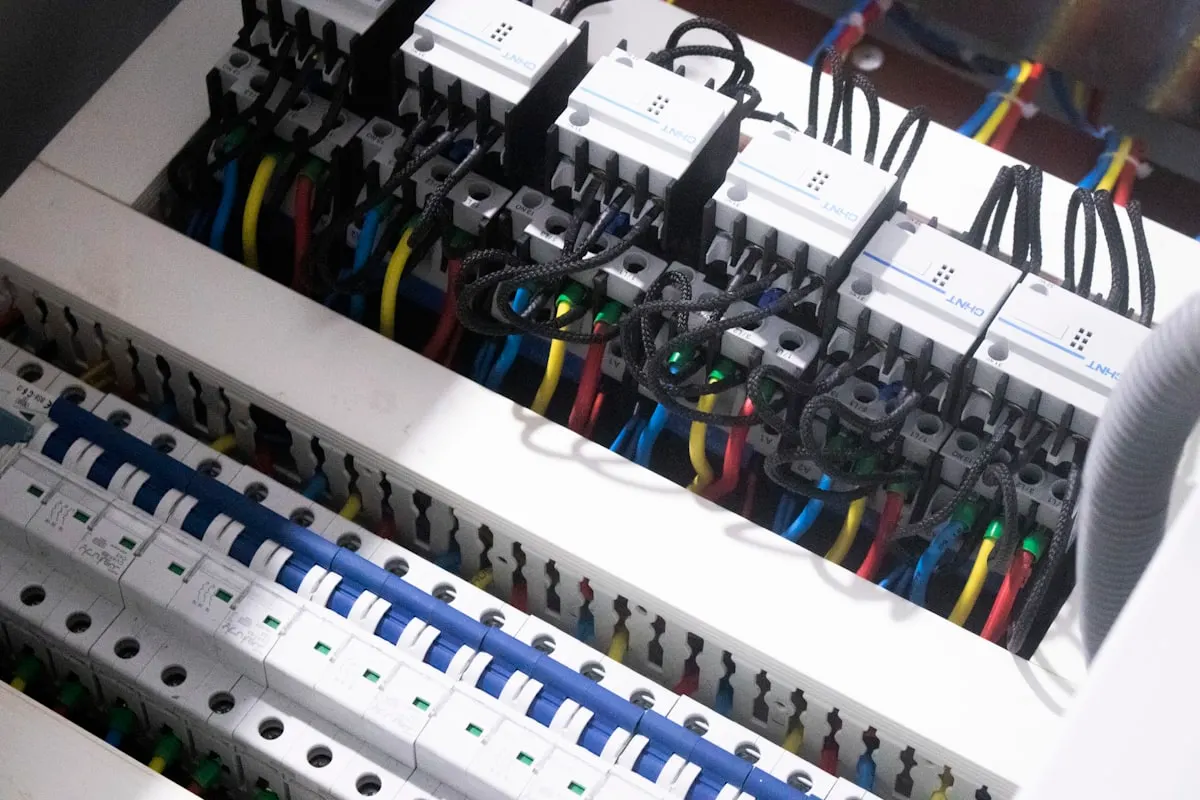
Most electrical fires and accidents at home do not start with anything dramatic, but with everyday habits: one power strip too many, a pinched cord, a socket left in service too long. Here are the most common hazards — and what you can actually do about them.
Electrical safety at home is less about luck and more about routines. Nothing here requires tools or opening up the installation — under the Swedish Electrical Safety Authority's rules, all work on the fixed installation must be carried out by a registered electrical installation company.
Overloaded sockets and power strips
The power strip is convenient but treacherous: it makes it easy to load a single wall socket with more than it was built for. The worst offenders are high-power appliances — heaters, kettles, tumble dryers, ovens — which should never run through a power strip or extension cord, only directly from the wall socket. Never daisy-chain power strips, and feel plugs and sockets from time to time: warmth is always a warning sign. If a room permanently needs more sockets, that is a sign the installation no longer matches how you live — have an electrician add sockets instead of building cord arrangements.
Cords, chargers and batteries — including the e-bike
Damaged cords are among the most common causes of fire. Replace cables that are pinched, cracked or patched with tape, and never run cords under rugs or through door gaps where they wear. Use good-quality chargers with proper markings, ideally the original charger, and do not leave devices charging on the bed or sofa where the heat cannot escape.
Lithium-ion batteries — e-bikes, e-scooters, power tools — deserve extra respect. A damaged battery can catch fire quickly and violently, and the fire is very hard to put out:
- Charge while you are awake and at home, on a hard, non-combustible surface
- Do not charge in the hallway or stairwell — that is your escape route
- Stop using batteries that are swollen, damaged or give off a smell
- Let the battery cool down after a ride before charging
- If a battery or any electrical equipment catches fire: evacuate, close the door and call 112 — never try to extinguish it with water
Test the RCD — a habit that can save lives
The residual current device (RCD) cuts the power in a fraction of a second if current leaks the wrong way — through a person, for example. But it is a mechanical component that can seize up if it never gets exercised. Press the test button a couple of times a year — many people do it when the clocks change in spring and autumn. The power should cut instantly, and the device should reset normally afterwards. If it does not, or if your home has no RCD at all, that is a clear-cut job for an electrical installation company. The protection is cheap compared with what it protects.
Older installations: screw fuses and unearthed sockets
If you live in a house or flat with screw-in fuses, fabric-insulated wiring or unearthed sockets, the installation was built for another era of electricity use. Unearthed sockets in kitchens, bathrooms or outdoors are a particular risk, because environments with water and metal are exactly where protective earthing matters most. Never trick the system with adapters or by swapping plugs — the protective earth is not in the wall just because the plug happens to fit. As the owner, you are responsible for keeping the installation safe. Modernisation — an RCD, earthed sockets, a new consumer unit — is designed and carried out by an authorised company, and the labour cost normally qualifies for the Swedish ROT tax deduction of 30 percent; see Skatteverket for the terms.
Children and electricity
Modern wall sockets have built-in shutters, but that protection only covers the socket itself. Keep chargers unplugged when not in use — a charger left in the socket with its cable in a child's mouth is a real hazard. Make sure cords for irons, kettles and lamps do not dangle within reach, and place power strips behind furniture or in cord boxes. Older children can learn the two ground rules early: electricity and water stay apart, and damaged cords are never touched.
Electricity outdoors, in the garden and through the seasons
Outdoors, electricity meets its worst enemy: moisture. Only use equipment rated for outdoor use with the right ingress protection, run garden machinery from RCD-protected sockets, and bring extension cords in after use instead of leaving them in the flowerbed all year. Check the cables on your pressure washer and lawnmower before the season starts — one winter in the shed can be enough for the insulation to crack.
Each season has its own patterns. In winter: festive lighting with proper markings, never more light strings connected in series than the manufacturer allows, and switched off when you sleep or leave home — a timer makes that effortless. Portable heaters must stand clear, never be covered and never run through a power strip. In summer, it is the pool, the patio lighting and the outdoor kitchen that deserve the same scrutiny: correct equipment, intact cables, RCD protection.
When is it time to book an electrical inspection?
A review by a qualified electrician is worthwhile when the installation is getting on in years, when you have bought a home and do not know what has been done before, after a renovation with unknown history — or when small faults start recurring without an obvious cause. The inspection covers the consumer unit, RCD, sockets and visible installations and gives you a prioritised list: what is urgent, what should be planned, and what is in good shape. El Jour 24 carries out electrical inspections across Stockholm and answers around the clock on 08-557 702 11 — and if you ever need acute help, a qualified electrician is normally on site within 1 hour.